Nighttime Cycling Circuits and Their Influence on Team Sports Participation in Paris's District Networks
David Hartmann · Aug 21, 2026
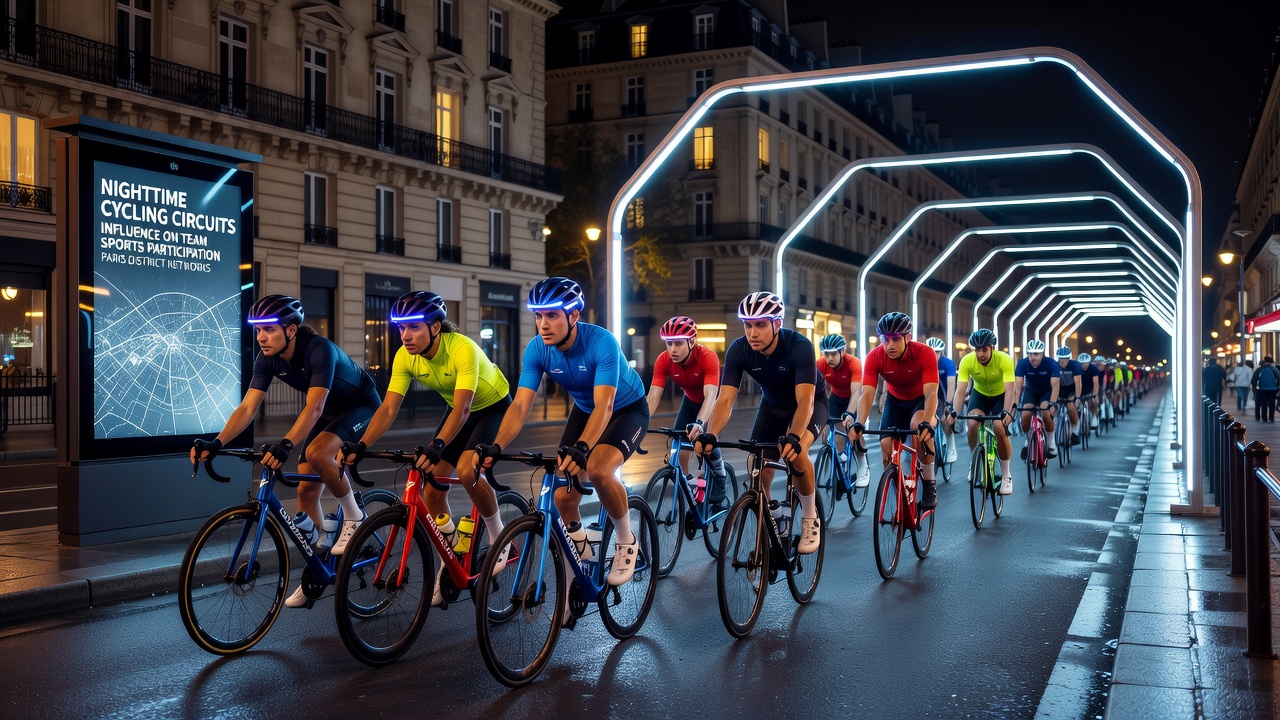
Nighttime Cycling Circuits and Their Influence on Team Sports Participation in Paris's District Networks
Paris has expanded its nighttime cycling circuits across multiple arrondissements since the early 2020s, and these routes now connect residential neighborhoods with sports facilities in a coordinated district network. City planners designed the circuits to operate after sunset with dedicated lighting, traffic controls, and group ride schedules that accommodate working residents. Participation data from the Paris sports department shows steady growth in registered users, and many of those users also join organized team activities at nearby venues.
Development of the District Circuits
Engineers mapped the circuits to link the 20 arrondissements through secondary streets and converted paths, which reduces conflicts with daytime traffic while maintaining access to parks and stadiums. The network incorporates sensors that adjust illumination based on rider density, and maintenance crews perform weekly checks to keep surfaces clear. By August 2026 the city plans to add two additional loops in the eastern districts that will extend reach into previously underserved zones, according to official project timelines published by municipal authorities.
Community organizations coordinate weekly group rides that start at central meeting points and finish near multi-sport complexes. These rides typically last between forty-five and ninety minutes, and participants receive route maps that highlight connections to basketball courts, soccer fields, and indoor training halls. Records kept by district sports offices indicate that riders who complete at least eight nighttime circuits per month show higher rates of subsequent enrollment in team leagues.
Measured Effects on Team Sports Enrollment
Statistics compiled by the French Ministry of Sports reveal that districts with active nighttime circuits recorded a 17 percent increase in team sport registrations between 2023 and 2025. The same reports note that the largest gains occurred in volleyball and handball programs, where group rides serve as informal training sessions that build coordination and social ties before formal matches begin. Researchers at the University of Paris-Saclay tracked 1,200 residents over two seasons and found that circuit users were 2.3 times more likely to join a club team than non-users living in the same neighborhoods.
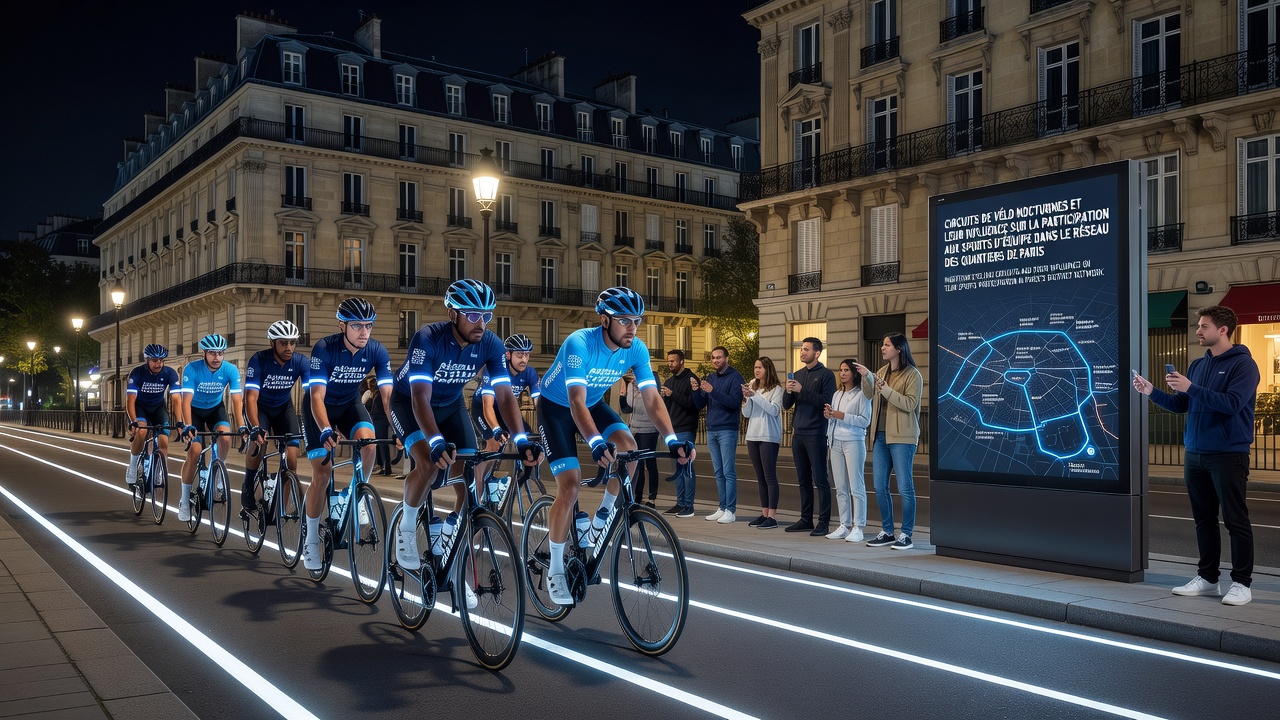
Local clubs have adapted their schedules to align with circuit operating hours, and several now offer combined memberships that include both cycling access and team practice slots. Equipment sharing programs at district hubs further lower barriers, because riders can borrow helmets and lights without separate purchases. These arrangements have proven especially effective in the 11th, 18th, and 20th arrondissements, where population density and limited green space make evening group activities more practical than daytime alternatives.
Integration with Existing Sports Infrastructure
Each circuit terminates at or near facilities already used by team sports leagues, which allows riders to transition directly into training sessions without additional travel. District managers installed secure bike storage at these endpoints, and usage logs show consistent overnight occupancy rates above 65 percent. The physical proximity has encouraged coaches to incorporate short cycling segments into warm-up routines for certain age groups, particularly under-18 squads that compete in inter-district tournaments.
Partnerships between cycling associations and established sports clubs have produced joint events such as relay challenges that combine segments on the circuits with on-field drills. Attendance figures for these hybrid events exceeded 4,000 participants across the 2025 season, and organizers report that repeat attendees frequently sign up for both cycling and team memberships. The model draws on practices documented in similar European cities, including programs coordinated through the European Cyclists' Federation that emphasize multi-sport pathways rather than single-discipline focus.
Participation Patterns Across Districts
Variation appears between central and outer arrondissements, with the 4th and 5th showing higher proportions of adult recreational riders while the 13th and 19th record stronger youth involvement. Gender balance has improved since lighting upgrades in 2024, and current breakdowns indicate women comprise 38 percent of regular circuit users. Age distributions remain broad, spanning from teenagers preparing for school teams to adults maintaining fitness for masters leagues.
Weather data collected over three winters indicates that participation drops by roughly 22 percent during periods of sustained rain, yet the overall annual trend continues upward because makeup sessions and indoor alternatives keep participants connected to their teams. District coordinators use these patterns to adjust staffing and to promote off-peak rides that still feed into weekend matches.
Conclusion
The nighttime cycling circuits form an operational layer within Paris district networks that supports measurable increases in team sports participation through direct geographic links, scheduled group activities, and shared membership structures. Continued expansion scheduled through August 2026 will extend these connections into additional neighborhoods, and ongoing data collection by municipal and academic partners will track further shifts in enrollment across the city's sports ecosystem.